

NUAR Is A Breakthrough, But Underground Risk Has Not Disappeared
Despite the National Underground Asset Register now covering more than 80 per cent of buried infrastructure, around 230 underground utility strikes still occur every working day in the UK.
For Tom Chapman, Business Development Manager at Lucion Survey, that statistic serves as a reminder that better data does not automatically eliminate underground risk.
According to Zurich, an estimated 60,000 underground utility strikes cost the UK economy approximately £2.4 billion each year once repair costs, programme delays, traffic disruption and safety impacts are considered. With NUAR bringing together underground asset information into a single national platform, there is an understandable expectation that those numbers should begin to fall significantly.
Chapman believes NUAR represents a genuine step forward for the industry. “NUAR is transformative,” he says. “For anyone who has ever tried to piece together a coherent picture of underground constraints from outdated CAD files and inconsistent PDFs, having one starting point and one dataset is a major leap forward.”
However, he is clear about what it can and cannot do. “NUAR is a register, not a survey. It shows what should be there based on the records. It does not guarantee what is actually there in the ground.”
He recently spoke to a project manager who lost three weeks on a residential scheme after a mechanical excavator struck a telecoms cable that was not shown on the plans.
“We had the plans. We did everything right,” the contractor told him. Except the plans were incomplete, inaccurate, or based on historic drawings that had been digitised and transferred between asset owners over decades. The cable was real. The delay was real. The consequences were real.
Chapman describes this gap between record data and physical reality as the last metre problem. “Asset records might show a water main running along a boundary,” he explains. “But is it exactly where the line is drawn. Is it at the depth stated? Has the settlement moved it? Has additional infrastructure been added since the record was created? And what about services that were never formally recorded at all?”
The HSE’s HSG47 guidance sets out three key elements of safe excavation: planning the work, locating and identifying buried services, and safe digging practices.
“NUAR strengthens the planning stage enormously,” Chapman says. “It reduces the time spent chasing records and gives a more complete picture earlier in the project lifecycle. That supports better forecasting and more realistic programmes.”
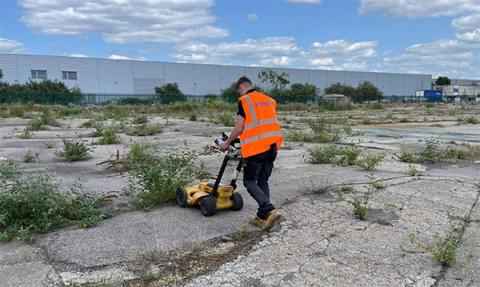
But planning alone does not prevent strikes. “Locating and verifying what is actually underground still requires physical investigation. PAS 128 aligned utility detection, Ground Penetrating Radar, cable avoidance tools and, where necessary, trial holes. It also requires professional interpretation of the results in context.”
“That gap between record and reality is where risk lives,” Chapman continues.
With more than 15 years in the sector, Chapman believes NUAR is accelerating a broader shift in mindset. “The old approach was reactive. Get the statutory plans, do a quick sweep, start digging and deal with problems if they arise. High risk, high cost and high stress.”
He sees a growing number of contractors moving towards a more proactive model. “The more progressive approach prioritises understanding what is there, verifying it properly, designing around constraints and only then committing plant and programme.”
NUAR makes that approach faster and more accessible than ever before. But it does not remove the need for expertise on the ground.
“Use NUAR. It is a powerful tool and it will save time and frustration,” Chapman says. “But do not stop there. Combine national data with proper utility surveying and site-based validation. Because the one thing worse than not having information is thinking you have information when you don’t.”